
Criminal Court Cases in Aiken County
Aiken County is part of South Carolina's Second Judicial Circuit. Circuit Court's Court of General Sessions hears felony and other serious criminal prosecutions. Its clerk keeps the filed case record, docket activity, public documents, disposition, and sentence. The General Sessions counter is on the third floor of 109 Park Avenue SE in Aiken. The office can be reached at 803-642-1715 or clerkofcourt@aikencountysc.gov.
Not every Aiken County criminal court case reaches General Sessions. A magistrate may hold an initial or bond hearing and retain a summary matter. Municipal courts handle city ordinance, traffic, and some lower-level criminal cases. Central Traffic Court also has its own county traffic role. The charging paper, ticket, bond sheet, or case number should identify the venue. Searching one clerk alone can miss a valid case held by another Aiken County court.
Aiken County Court Case Venues
The local court map is split by jurisdiction, not by one countywide file room. Aiken Magistrate operates at 1930 University Parkway, while Bond Court is at 435 Wire Road. Central Traffic Court is at 223 Park Avenue SW. Midland Valley, Monetta, New Ellenton/Jackson, and North Augusta magistrates serve other areas. Municipal courts remain separate custodians for matters filed there.
| Court or office | Record scope | Contact |
|---|---|---|
| General Sessions Clerk | Felony and serious Circuit Court cases | 803-642-1715 |
| Aiken Magistrate | Summary criminal matters | 803-642-1744 |
| Bond Court | Initial and bond hearings | 803-642-2044 |
| Central Traffic Court | County traffic matters | 803-642-7555 |
A court name on the docket is a routing instruction. It tells a searcher where to ask for a certified copy, a document missing online, or a current status that the index has not yet shown.
North Augusta Magistrate, for example, handles summary matters in its service area, while a North Augusta Municipal Court case may remain with the city. The same distinction applies in Aiken. Read the caption and venue before calling. A clerk can confirm its own file, but it cannot certify a record held by a different court.
Aiken County Case Record Searches
The free South Carolina Judicial Branch Case Records Search routes users to the Aiken Public Index. The system needs cookies and JavaScript, and case details may open in a pop-up. A blocked window or failed response is not proof that no Aiken County case exists. The research inspection encountered a vendor error before the live controls could be fully inventoried, so no unverified field names should be assumed.
- Open the Judicial Branch search and select Aiken County.
- Use the live party or case controls shown by the portal.
- Open the matching detail and confirm the court, case number, and filed charges.
- Read each charge outcome and inspect available docket entries or public documents.
- Contact the named clerk for older, missing, non-downloadable, or certified material.
| Search element | Verified behavior | Practical note |
|---|---|---|
| County selector | Aiken is selected from the state landing page | Use the county tied to the filing venue |
| Party or case controls | Available in the live index | Exact labels were blocked during research |
| Case detail | May open through a pop-up | Allow pop-ups before treating a blank result as final |
| Documents | Public filings may be available | Protected material and identifiers are withheld |
Aiken County Public Index Limits
The Aiken Public Index interface is the main remote view of local court records. Its search screen helps readers move from a name or known case into the docket. The official portal was captured for this project and shows why browser settings are part of access.
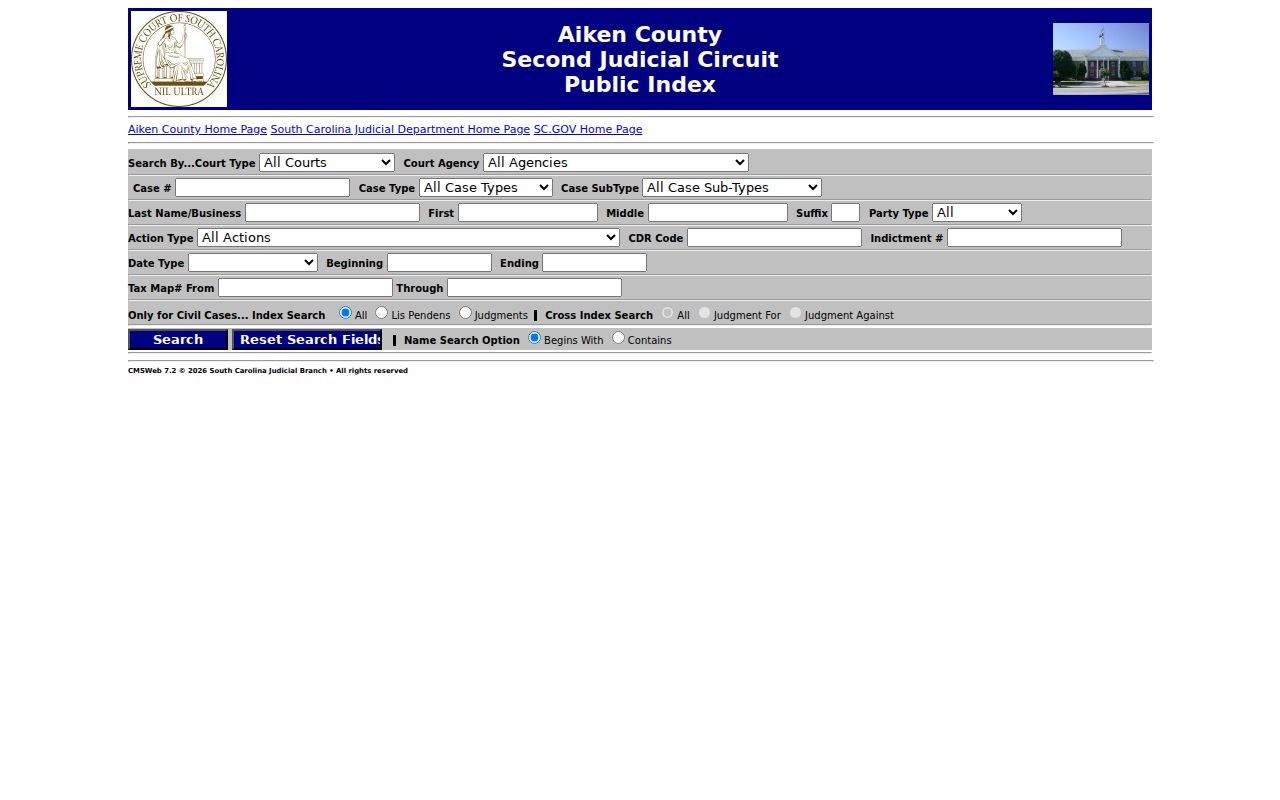
The image documents the Aiken County entry point, but the clerk remains the source for a complete or certified case file. Some municipal records appear in the index and some do not. Since January 1, 2026, home addresses have been removed from both new and existing public-index cases. A missing address reflects a privacy rule, not necessarily a missing court file.
What a Criminal Case File Contains
An Aiken County case file is charge-centered. It can record a complaint or indictment, hearings, motions, pleas, and a separate outcome for each count. Readers looking for the result should not stop at a single status label. “Disposed” only means the court has resolved that item. It may reflect conviction, dismissal, nolle prosequi, or acquittal.
| Case number and court | Identifies the prosecution and the Aiken County clerk that holds it. |
|---|---|
| Charging document | States the filed accusation, which may differ from the intake charge. |
| Docket entries | List filed events, motions, pleas, and other court activity. |
| Hearings and bond | Show scheduled proceedings and release conditions when public. |
| Disposition | Records the outcome of each charge, not just the case as a whole. |
| Sentence and costs | Shows the court consequence after a guilty plea or verdict. |
Judge and counsel names, statutes, fines, and public filed documents may also appear. Confidential material, protected identifiers, juvenile records, and sealed or expunged files are not made public merely because a docket system exists.
Reading Aiken County Case Outcomes
Several short terms can change the meaning of an Aiken County court record. They describe legal steps, not a person's whole history. Read them at charge level and compare the final entry with any earlier arrest or booking account.
- Indictment
- A grand-jury accusation that permits a prosecution to move forward. It is not a finding of guilt.
- True bill
- A grand jury approved the indictment.
- No bill
- A grand jury declined the proposed indictment.
- Nolle prosequi
- The prosecutor stopped the charge without a conviction.
- Disposition
- The charge's outcome, including conviction, dismissal, acquittal, or nol pros.
A plea may resolve one count while another is dismissed. That is why the docket is more useful than a broad “open” or “closed” label when the goal is to understand what happened in an Aiken County prosecution.
Criminal Case Stages in Aiken County
An Aiken County criminal court case can begin with an arrest or summons and a prompt initial or bond appearance. The Solicitor then screens the matter. A serious case may proceed through indictment or another lawful charging route in General Sessions. Arraignment records the charge and plea. Discovery, motions, and pretrial appearances follow before a negotiated plea or trial. A conviction leads to sentence, with appeal or post-conviction review possible later.
Case flow: Charges Filed › Arraignment › Pretrial › Plea or Trial › Disposition › Sentencing
The incident report and booking sheet belong to earlier stages. They may use an intake charge that the prosecutor later changes. The filed Aiken County docket is the better source for the judicial result.
Aiken County Certified Case Copies
When an Aiken County record is missing online, take the case number and venue to the exact clerk. The General Sessions counter can address felony and serious criminal files. Ask for the current plain-copy or certified-copy price before ordering because the inspected court material did not publish a criminal-copy schedule. A municipal or magistrate clerk, not General Sessions, must handle a file that remained in that summary venue.
General Sessions Clerk
109 Park Avenue SE, third floor
Aiken, SC 29801
803-642-1715
clerkofcourt@aikencountysc.gov
A narrow request works best: provide the court, case number, party name, and document sought. If the index failed because of cookies or a blocked pop-up, test those settings before asking the clerk to run a search.
Aiken County Veterans Court Records
The Second Judicial Circuit also operates a Veterans Treatment Court route. Its official application gathers service history, residence and support, health information, transportation, and charge, court, and arresting-agency details. The program uses coordinated information exchange among justice and treatment partners. That makes its application more than a generic request form.
The local expungement process also shows how records can move after a case ends. The Second Circuit expungement application records charge and court details before the Solicitor checks multiple justice sources and routes an eligible order.
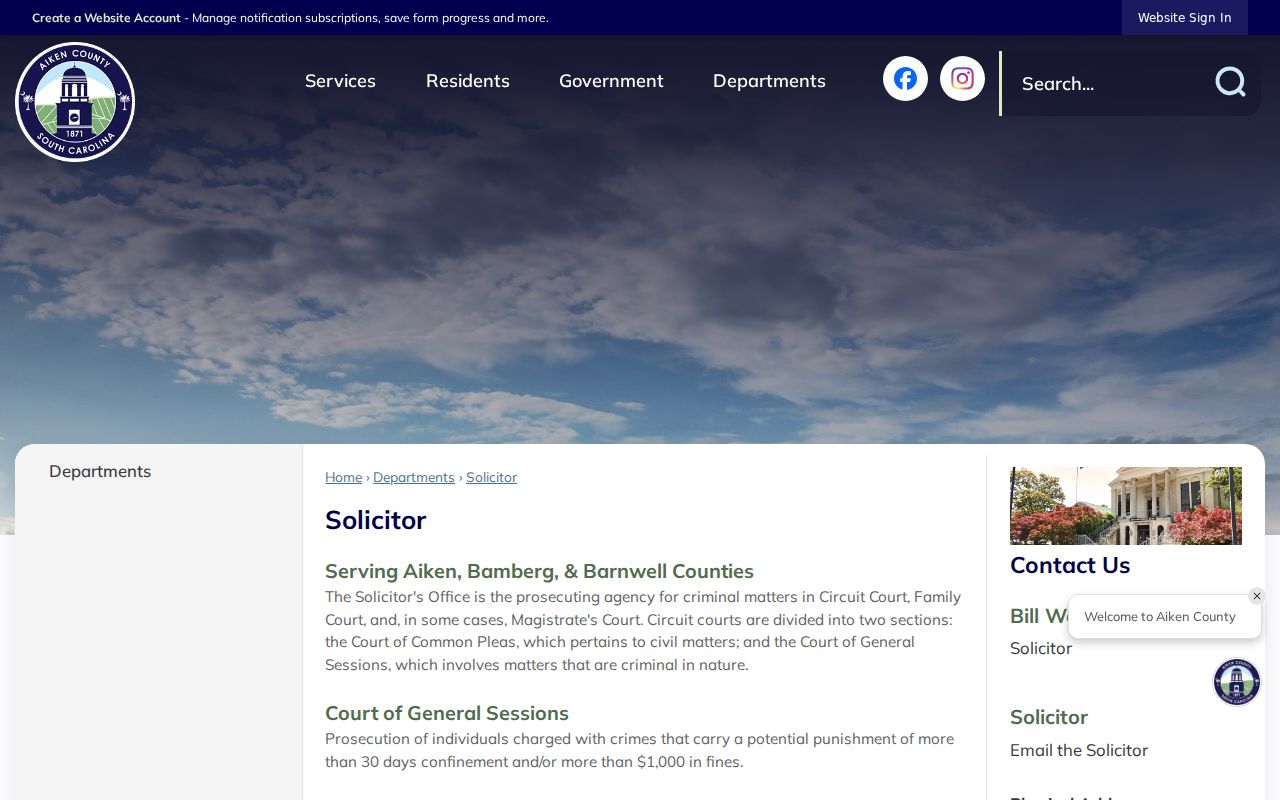
This official form illustrates why a written filing, rather than an informal counter question, begins the local review. Eligibility and fees depend on the statute and case outcome.
Access Rules for Case Records
South Carolina court access has firm limits. South Carolina FOIA provides access to existing public records but permits redaction and exemptions. Judicial E-Filing Rule 10 allows public case status and filed documents subject to confidentiality and required identifier redaction. Juvenile material, protected victim information, sealed files, and expunged records do not become public through an Aiken County court lookup.
The record systems also serve different purposes. Public Index is case-centered. SLED CATCH is a paid, person-centered statewide arrest and conviction compilation. CATCH can lag when fingerprints or dispositions never reach the repository, while the Aiken County docket may contain the local court result. For a broader explanation of that repository relationship, use the county's criminal history overview.
South Carolina law also provides specific treatment for qualifying dismissed, acquitted, or nol-prossed charges. Section 17-1-40 addresses destruction and limited sealed retention, while section 17-22-950 covers certain summary-court outcomes without a fee. A record that no longer appears online may therefore be restricted by law, not lost through a search error.
The Aiken supervision office listing provides another official view of the justice system after sentence.
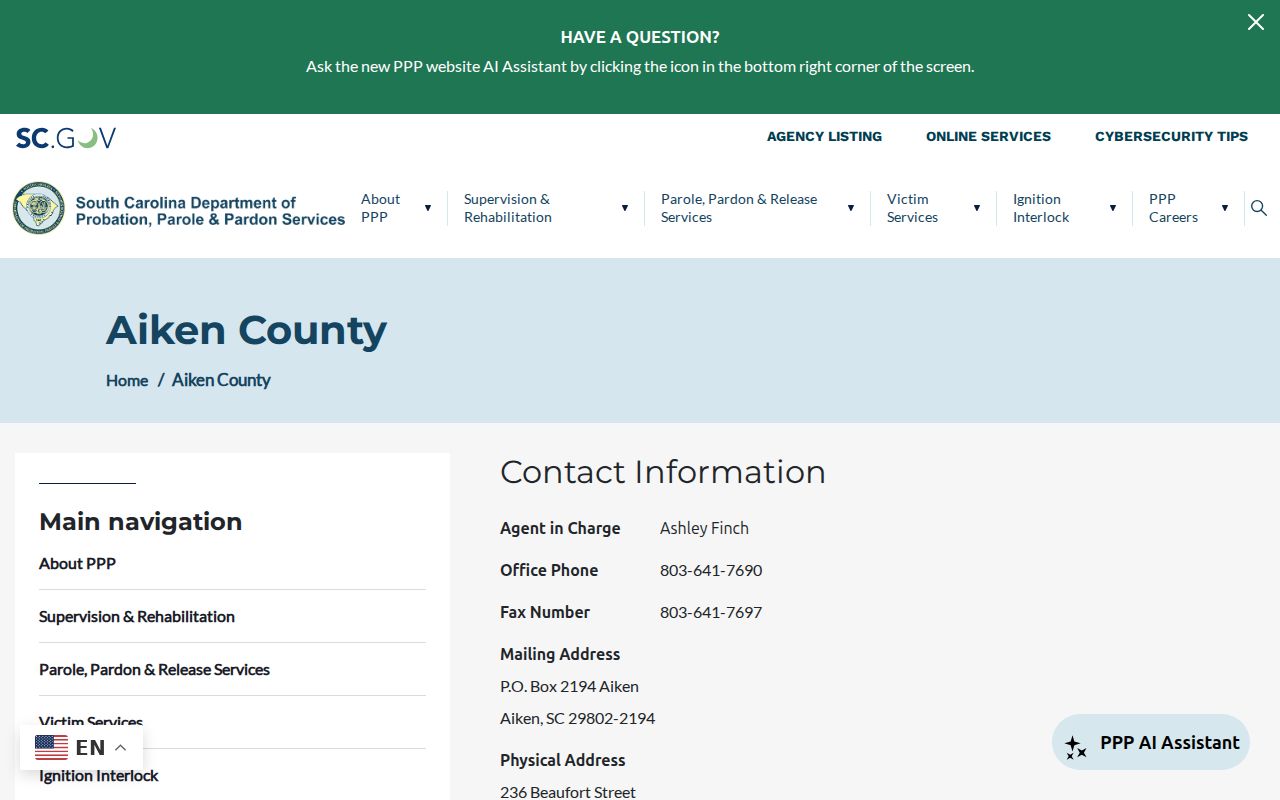
Probation or parole status is distinct from the underlying court file. Use the judgment and sentence to read the court's order, then the supervising agency for current supervision information.